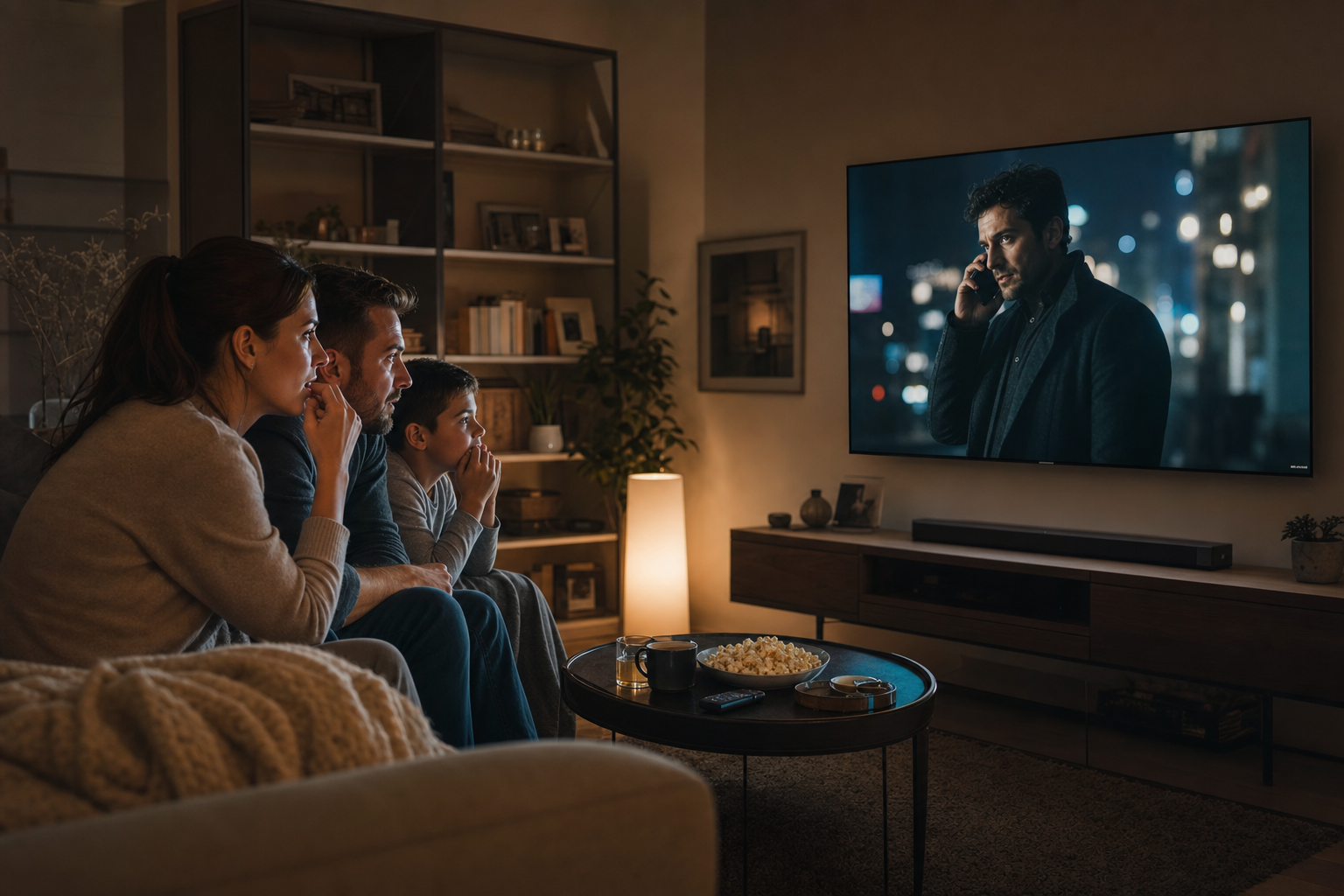
Nobody planned for it to go out live.
The feed was supposed to cut. It didn't. For about forty seconds, what was happening in that studio — the expressions, the unrehearsed collapse of composure, the reaction nobody had prepared for — went out to millions of households across the country.
Some people saw everything. Others saw very little. Same channel. Same broadcast. Different televisions.
That gap — between what the camera captured and what actually reached you — isn't a broadcast problem. It's a display problem. And it doesn't only show up in moments that go viral. It shows up every night.
"The broadcast captured it all. Your TV decided what you got to see."
The Scenes Your TV Can't Render
Think about the last time you watched something with real darkness in it. Not metaphorical darkness. Actual darkness — a hallway at night, a face partly in shadow, a room lit by a single lamp.
On a well-calibrated OLED panel, shadow is shadow. The detail in the dark areas of a frame is there because each pixel manages its own light independently. Black is genuinely black. What's beside it isn't crushed into grey.
On a standard LED panel, even a decent one, the backlight bleeds. Dark areas fill with ambient light. Detail disappears. The director shot the scene in deliberate near-darkness. Your TV turned it into murk.
What your TV is probably doing to the picture
Budget LED panels — anything relying on edge-lit backlight technology under 400 nits peak brightness — compress shadow detail and crush midtones. Human faces in mixed or low lighting lose the micro-contrast that makes expressions readable. You genuinely cannot see what an OLED or high-end Mini-LED owner sees.
What Actually Happens to a Face
The moments that stay with you in good television aren't the plot mechanics. They're the faces.
The character who holds it together three seconds too long. The look that crosses someone before they decide what to say. The moment a performance does something a script can't. These are the things that make television worth watching.
They're also exactly what most TVs fail to show you.
Human faces are the most complex thing a display has to render. The micro-contrast in skin tone, the catch of light in an eye, the way shadow moves across a face in mixed lighting — these live in the midtones and shadow detail that budget panels sacrifice first. On an OLED, a face looks the way a face looks on a cinema screen. The expression the director wanted you to read is readable. On most household TVs, it isn't.
"The production teams spend months getting the picture right. Your TV undoes it in a fraction of a second."
Why It Gets Worse as TVs Get Thinner
The sets that look most impressive on a showroom floor — bright, vivid, enormous — are often the worst in a dark room. Which is exactly where most serious television is meant to be watched.
Edge-lit LED panels produce brightness numbers that mean almost nothing in real viewing conditions. That brightness comes at the cost of local dimming precision. When the scene is dark, the whole panel dims together. Shadow detail is the casualty.
OLED panels work differently. Each pixel is its own light source. It can be completely off while the pixel beside it is at full output. The contrast ratio is, in practical terms, infinite. Dark scenes look the way they were graded to look.
The TVs Worth Having
Not the most expensive. The ones that solve the actual problem — dark scenes, mixed lighting, the content that actually rewards a proper display.
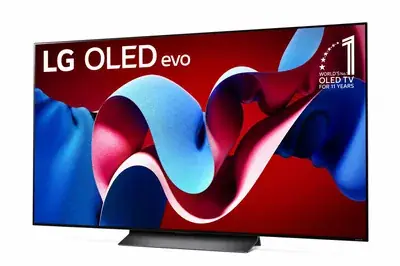
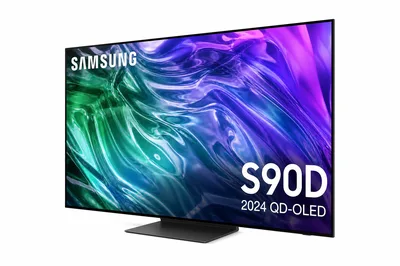
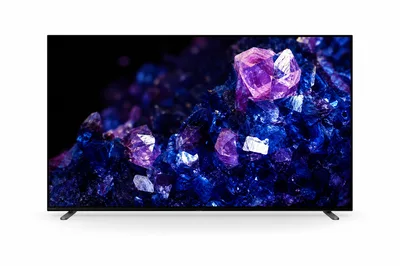
You've been watching the same shows for years. There's a version of them you haven't seen yet.